Sorry, www.ridge.co.uk is not supported by Internet Explorer.
Sorry, www.ridge.co.uk is not supported by Internet Explorer.


Ridge is helping Aston University to “activate” its campus, transforming the external areas to make them safe, welcoming and attractive. “It’s about drawing people in, so it almost becomes a city within a city,” says Matthew Winn, a Partner in our Project Management team. “It seems like a simple thing, but university campuses are not always designed in that way.”
A university’s campus makes that all-important first impression, and it will be the backdrop to lasting memories and shared selfies. It’s not just about the buildings: the public realm needs high-quality finishes and photogenic features like water fountains or public art. “You need to create those Instagram-moments,” says Andrew Bissell, a Partner in the Lighting Design practice at Ridge. “Give the campus an identity and make it somewhere students want to be.”
You need to create those Instagram-moments – give the campus an identity and make it somewhere students want to be.
Andrew Bissell, Lighting Design Partner
Diversity and inclusion is second nature to Gen Z, so good accessibility is essential. If someone who uses a wheelchair finds they cannot easily move around the campus, that’s not just a deal-breaker for them, it also sends a negative message to anyone who sees them struggling.
“The best way to find out what students want is to ask them. But it’s also the best way to develop a building or campus environment that’s out-of-date even before it opens. That’s why continuous engagement is a better approach than involving students in a major one-time consultation process, as that risks setting a project in stone, when it’s still five years away from being delivered,” says Matthew Winn. “We’ve got to be responsive, but build in flexibility too, because we can’t second guess what students will want in 2030. The biggest challenge will be adapting to expectations as they change.”
We’ve got to be responsive, but build in flexibility too, because we can’t second guess what students will want in 2030. The biggest challenge will be adapting to expectations as they change.
Matthew Winn, Project Management Partner
“The campus of the future will have a much wider range of features to allow students a bit of time away from their screens,” says Abby Foster, a Partner in our Sustainability Consulting team. “Green vistas with natural planting, water features, meandering paths, and vibrant social spaces that bring them together and combine technology and comfort. Universities have to help students strike the right balance, and students will expect it from them.”
Gen Z are digital natives, using technology intuitively and expecting instant results. They want buildings that know they’re coming, and adapt. But they don’t care about features that older generations prize, such as a manned reception desk. “Even in the last four years, everything has changed,” says Matthew Winn. “They just want to go to a screen, and be told who to see and where to go.”
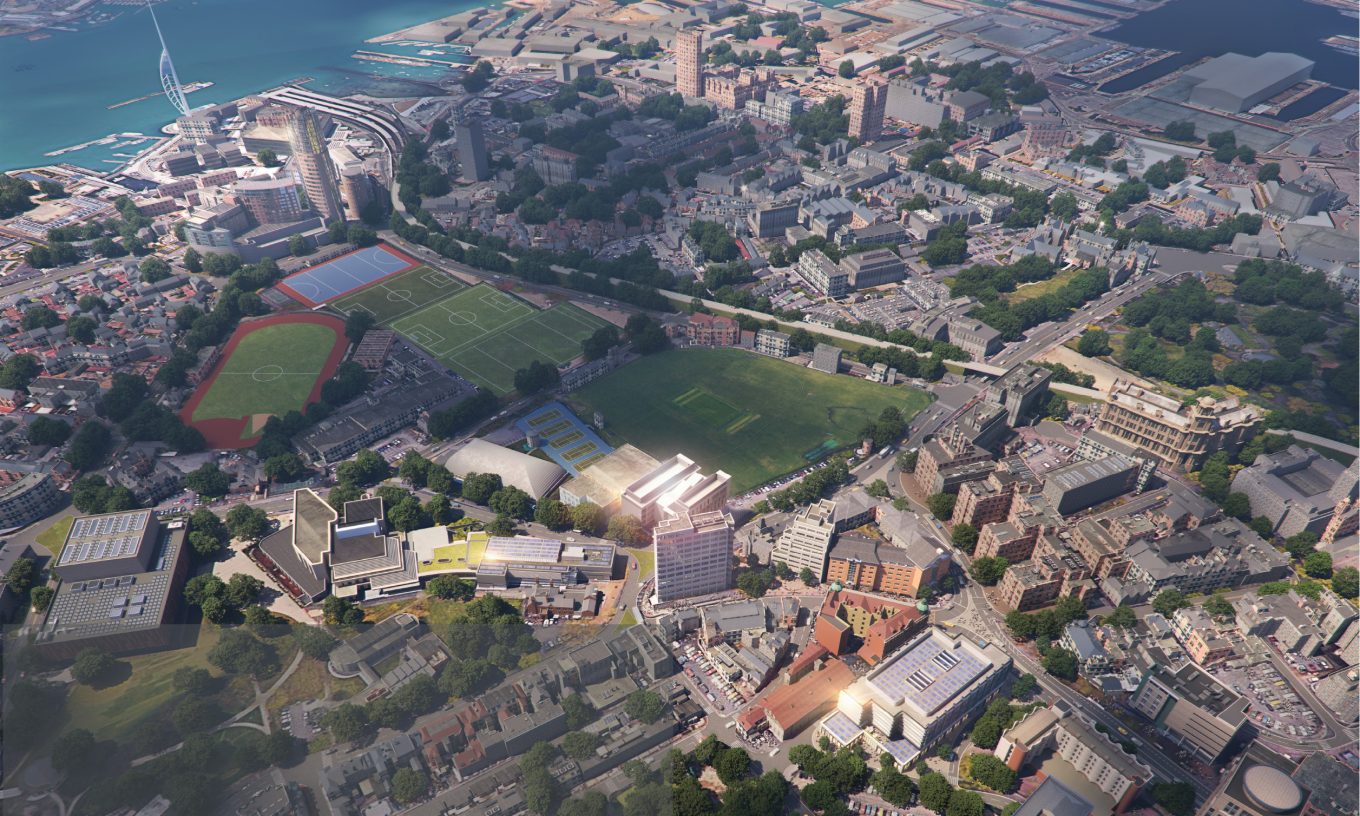
The University of Portsmouth has a new master plan that creates a central spine leading to an enhanced “heart” space. “The cohorts starting university today were victims of Covid at a pivotal time, spending much of their education in isolation,” says Simon Mason, a Partner in our Architecture practice and one of the master planning team. “We need to rethink campuses to help them feel like they’re part of something bigger and reintroduce the concept of community and social engagement.”
We need to rethink campuses to help them feel like they’re part of something bigger and reintroduce the concept of community and social engagement.
Simon Mason, Architecture Partner
Clear sightlines and open, well-lit circulation are essential, but we also need to protect nature, night skies and our circadian rhythms. “Identify the routes people use most at night, or create primary safe routes and discourage or block others,” says Andrew. “Smart technology can raise light levels when people are there, and turn them off when not needed.”
“Mental health is particularly pertinent for universities, because it can be a scary time.” says Abby. “We need to offer students a home away from home, with everything they need to support them in the transition.” Abby worked with the University of Winchester to measure its flagship West Downs Centre against the WELL certification criteria. It scored highly for its vegan café, refill shop and varied seating in the library, as well as a dimly lit contemplation space with cubbies where students can plug in their phones to charge and take some time out.
Mental health is particularly pertinent for universities, because it can be a scary time. We need to offer students a home away from home, with everything they need to support them in the transition.
Abby Foster, Sustainability Partner
Our contributors to this article would love to hear from you. Want to know more, get in touch:

Matthew Winn is a Project Management Partner. Contact Matthew at: [email protected]

Andrew Bissell is Lighting Design Partner. Contact Andrew at: [email protected]

Abby Foster is is a Sustainability Partner based in our Winchester office. Contact Abby at: [email protected]

Simon Mason is an Architecture Partner. Contact Simon at: [email protected]
Read THE UNIVERSITY CHALLENGE: Reshaping estates to unlock hidden value

Thank you for signing up. We look forward to sharing updates with you