Sorry, www.ridge.co.uk is not supported by Internet Explorer.
Sorry, www.ridge.co.uk is not supported by Internet Explorer.


Wales has long been a haven for stargazers, boasting three protected International Dark Sky Places within its borders. Now, with the launch of its new Good Practice Guidance: Planning for the Conservation and Enhancement of Dark Skies in Wales, the nation is stepping up its commitment to tackling light pollution and preserving its breathtaking nightscapes. Our team at Ridge is playing a key role in this initiative, helping to transform lighting across the country and ensure dark skies for generations to come.
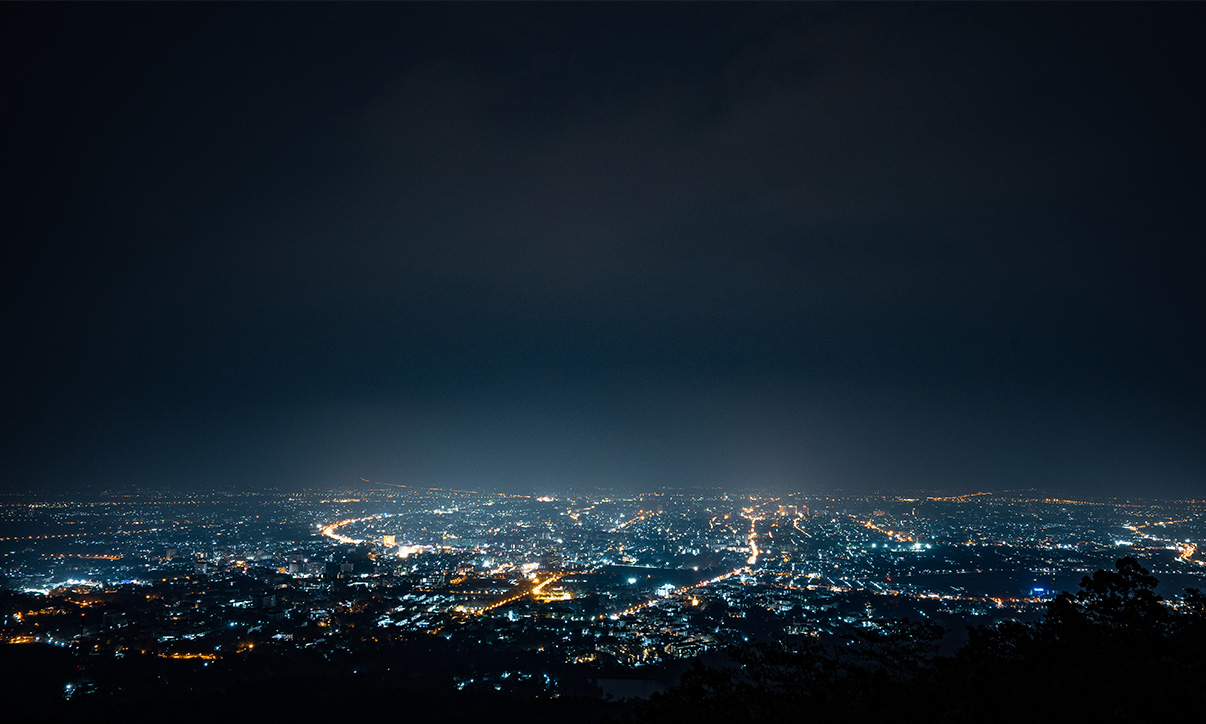
Artificial light pollution is an increasing problem worldwide. A 2016 study found that 80% of the global population – and over 99% of people in the US and Europe – live under light-polluted skies. This excessive artificial lighting has far-reaching consequences for both humans and wildlife.
Darkness is essential for maintaining healthy circadian rhythms in humans, as it triggers melatonin production – the hormone that regulates sleep. Disruptions to this cycle can contribute to sleep disorders and other health issues. Wildlife is equally affected. Many nocturnal species rely on natural darkness for hunting, navigation, and reproduction. Bright artificial lights can disorient them, disrupt their behaviour, and ultimately impact entire ecosystems.
Artificial light pollution is an increasing problem worldwide. A 2016 study found that 80% of the global population – and over 99% of people in the US and Europe – live under light-polluted skies. This excessive artificial lighting has far-reaching consequences for both humans and wildlife.
Our Lighting team conducted surveys across all eight designated landscapes in Wales – three National Parks and five Areas of Outstanding Natural Beauty – to identify buildings contributing to excessive light pollution. Of the 42 buildings and sites highlighted, we have already redesigned the lighting for around 20, implementing solutions that minimise environmental impact. The right product is critical for dark sky designs but equally, good design and an understanding of what people are doing, and where, is critical for dark sky designs.
Throughout Wales, we assessed a wide variety of structures – from schools, colleges, offices, heritage buildings, farms, caravan parks to visitor centres, a mental health facility and a castle. Redesigning the lighting for such spaces not only preserves the night sky but also supports the wellbeing of residents and visitors.
Thanks to the Welsh Government’s investment of £360,000, building owners and homeowners have been able to implement these improvements at no cost.
As part of the initiative’s launch, our Lighting Design Partner, Andrew Bissell, delivered a talk on designing for dark skies in line with the RIBA design stages. Our expertise in lighting design continues to shape the conversation around responsible illumination, and we look forward to sharing more insights soon.
With Wales leading the charge on dark sky preservation, we’re proud to be playing a part in ensuring a healthier environment for all. To find out more, you can contact Andrew on [email protected]


Thank you for signing up. We look forward to sharing updates with you