Sorry, www.ridge.co.uk is not supported by Internet Explorer.
Sorry, www.ridge.co.uk is not supported by Internet Explorer.


At Ridge, we have been involved in cladding remediation for over five years now. We’ve learned a lot about the issues that can arise, and how to manage them to keep projects on track. Following the introduction of the developer pledge, we have also taken on monitoring roles where developers are self-remediating. While the pledge is absolutely the correct way forward, it does also present its own challenges.
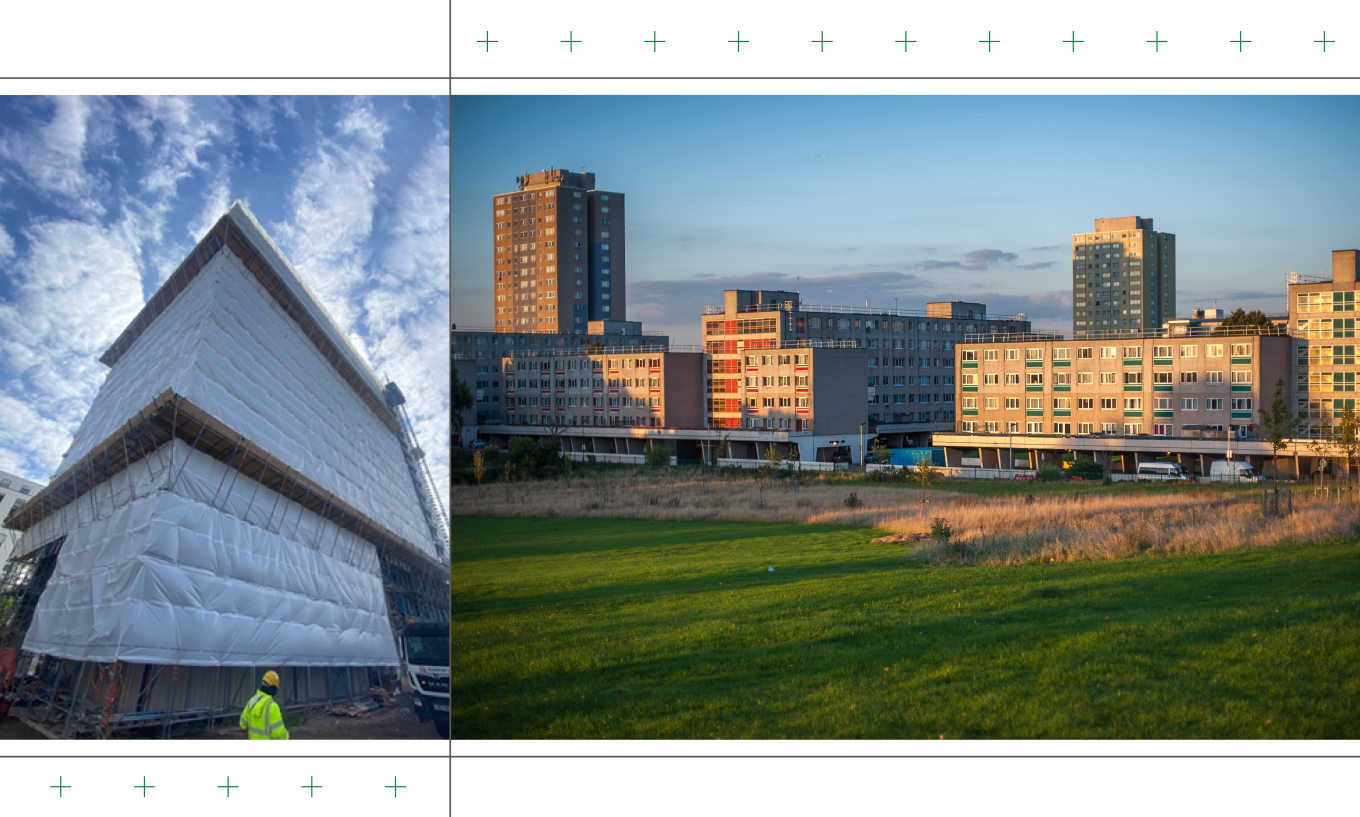
The ability to keep remediation projects moving forward is crucial to ensure the speedy replacement of unsafe cladding, but also to mitigate the significant disruption it causes. Residents must live behind scaffolding for months on end, usually unable to open windows more than a few inches. This limits natural ventilation, and they often have to live with reduced amounts of natural daylight too.
Under the Building Safety Act 2022, unsafe cladding systems in residential blocks over 11m must be removed or replaced, and the government has established two funding streams to pay for the work: the Building Safety Fund and the Cladding Safety Scheme. We must remember that when projects funded by these schemes are delayed, it inevitably leads to additional costs, some of which are avoidable. Ultimately, it’s the taxpayer who will bear the cost.
Cladding remediation projects are prone to difficulties because we can never be 100% confident of what we’re dealing with until the cladding is removed to expose the substrate. This leaves residents caught in the middle, between the rigid requirements of a government funding process, and the unknowns that can affect every project.
Mitigating these risks requires the project team to be proactive and prepared to have open conversations. Here are some insights into managing the process, and some thoughts on how we can continue to improve.
Defects can stem from a whole host of reasons, from inadequate design or specification, poor installation or missing components. Any of these can also lead to consequential damage to the building fabric due to water ingress. While we may not know exactly what we are dealing with prior to commencement of the works, suitably experienced professional advisors and contractors should have a good enough understanding of the likely risks that certain cladding systems and forms of construction may present. With the benefit of this experience, project teams can work collaboratively to manage the risks.
For example, the use of a Structural Framing System (SFS) in mid-rise and high-rise buildings is common and there are particular issues that we’re very likely to discover: inadequate fixings, incorrect spacing, defective insulation or corrosion due to poor detailing. In these cases, we might undertake additional opening up works to provide an early indication and help with forward planning. We can also work with designers to come up with solutions ahead of time, to generate a “playbook” of potential responses to whatever we discover on site.
If we believe additional work will be required, we have to act quickly to agree a solution, costs and submit a funding variation request. Additional funding can take three or four months to secure, so accurate cost forecasting is critical. Funding variations should ideally be submitted at least six months ahead to avoid the project grinding to a halt and incurring further costs. The funding streams have a process for dealing with variations, but project teams need to work together to ensure timely, high-quality applications.
The cladding crisis has created a high demand for experienced contractors and materials, essentially creating its own micro industry and, in turn, putting pressure on resources and experience. A two-stage design and build procurement route has become the norm, and contractors are well set up to deliver this model, including for applications to the Building Safety Regulator. That said, there is a debate around the timeframe for these in relation to cladding remediation, and how it can hamper the drive for speedier delivery.
Resource pressures within the industry, combined with the risks that cladding remediation presents on scope and associated costs, can inevitably lead to claims and disputes. When the requirements of government funding programmes are taken into account, this can cause a real conundrum in terms of how to deal with claims, ensure sufficient funding is in place and keep projects moving. This comes back to accurate cost forecasting and dealing with funding variation requests in a timely manner – but how do you assess if a loss and expense claim is valid? If it isn’t considered eligible for additional funding, where does this leave the project?
This poses a question as to whether the government could/should provide a central mediation or dispute resolution service for cladding remediation projects funded via the Building Safety Fund and Cladding Safety Scheme programme. Based on our experience, this could definitely save time and cost, and would remove the uncertainty around whether a claim will be considered valid.
There is no question that the developer pledge was necessary and is now aiding in the successful delivery of remediating buildings – but could it be simpler and quicker. We are providing monitoring roles on various developer-led remediation projects and a number of common issues often arise – could the industry or government find a common solution to these?
With many more buildings still to be made safe, we can all benefit from the insights that projects undertaken to date are yielding. And with retrofitting existing buildings set to account for a much greater share of construction activity, finding solutions for managing the unknowns and inevitable costs and disruption they present would be a worthwhile investment for the future.

Adrian Goulding is a Partner in the Building Surveying team at Ridge, based in Reading. He can be contacted at [email protected]

Thank you for signing up. We look forward to sharing updates with you