Sorry, www.ridge.co.uk is not supported by Internet Explorer.
Sorry, www.ridge.co.uk is not supported by Internet Explorer.


The record temperatures witnessed during the UK summer heatwaves of 2022 were yet more evidence of the increasingly frequent and extreme impacts of global warming. Overheating is becoming more commonplace in the UK, and the introduction of an Approved Document focusing on this is arguably overdue (although the scope of Approved Document O is limited to new build residential buildings – including housing, apartments, halls of residences and residential institutions such as care homes).
There are two permissible routes for demonstrating compliance:
Simplified method
The first step of the simplified method involves categorising a residence into a risk category based on its location – high risk locations including urban areas (and some suburban parts of London) – and the availability of cross ventilation (a single-aspect apartment will not have cross-ventilation, for example). Set criteria then need to be achieved based on the residence’s risk category, including limits to glazing, shading provisions and free area ventilation requirements. The restricted glazing allowances are particularly challenging.
Notably, this method is not permitted for apartment blocks which use a communal heating or hot water system with hot water distribution pipework – which rules it out for a significant number of new schemes.
Dynamic Thermal Modelling
The dynamic thermal modelling approach involves the use of modelling software such as IES Virtual Environment to demonstrate that the overheating risk has been assessed, thus affording a design team more design flexibility than the prescriptive requirements of the Simplified Method.
The assessment procedure should be in line with CIBSE TM59 design methodology for the assessment of overheating risk in homes (2017), but with additional stipulations regarding window opening profiles. The required modelling is defined as: ‘A method of building modelling that predicts the internal conditions and energy demands of a building at short time intervals using weather data and building characteristics’
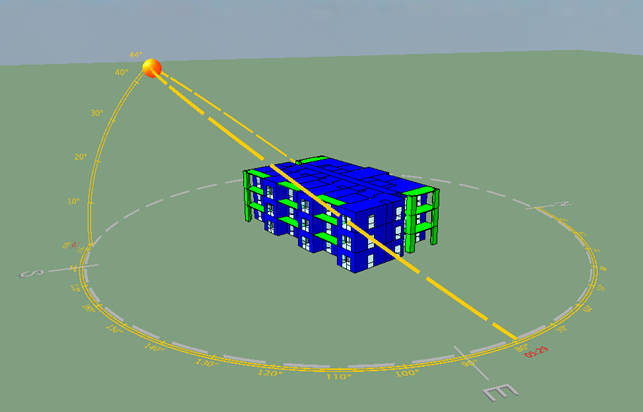
Dynamic Thermal Model
Some potential overheating mitigation methods that can be incorporated into this modelling include shutters, external blinds, overhangs, awnings, solar control glass and window reveals. Notably, Approved Document O dictates that internal blinds cannot be included as part of the strategy to mitigate overheating risk.
Ridge has been helping several clients undertake the required dynamic thermal modelling on their new build residential schemes. Early involvement is recommended to ensure a breadth of options are available for adoption within designs to enhance the thermal experience of future residents and ensure compliance with these challenging new regulatory standards.
We welcome the introduction of Approved Document O, which we believe is a positive step that will aid in providing climate change resilience in new build residential schemes.
Learn more about our sustainability expertise and get in touch with the team ➔

Thank you for signing up. We look forward to sharing updates with you