In this Insight paper, Project Management Partner Steve Cross gives an overview of the potential problems associated with the Large Panel System (LPS) construction method and the options available to LPS building owners. While some LPS buildings may be safe and in need of little or no work, others may be structurally compromised and in need of immediate strengthening, or demolition, to prevent catastrophic collapse. Steve makes the case that local authorities need to urgently assess their stock to ensure their residents are safe and to allow them to make decisions on possible options for any at-risk buildings.
What is LPS construction, and what should LPS building owners know?
LPS was a construction method used in the 1960s and 70s, where pre-cast concrete buildings were manufactured and assembled with large panels using walls rather than columns as the main load-carrying structural members.
Following the Ronan Point tragedy in 1968, when an LPS tower block partially collapsed following a gas explosion, it became apparent that some LPS blocks lacked the structural integrity to withstand ‘disproportionate collapse’ following the application of excess pressure resulting from, for example, impact, fire, high winds or explosion. In addition, some LPS buildings contain gaps within their construction, or where panels have moved, thus compromising compartmentation and fire safety.
The current Building Regulations demand that, to permit piped gas, all blocks over four storeys in height need to be able to withstand 5 psi static pressure (or 2.5 psi if piped gas is not present). However, our engineers have identified that many LPS blocks which do not meet the requirements still use piped mains gas, or require remedial action, meaning that the potential exists for another catastrophic collapse and loss of life.
In addition, during the decades since these buildings were constructed, several refurbishments or remedial actions may have been carried out and additional services incorporated. These may unwittingly have further compromised the structural integrity of the LPS blocks or fire compartmentation.
As the owners of any such buildings, landlords could be liable to prosecution for failures to act, including action under the obligations of the new Building Safety Act.
What needs to happen?
All LPS blocks must be structurally assessed to ensure that the buildings are safe to occupy.
Our specialist structural engineering team is experienced in carrying out the necessary, detailed investigations, tests and risk assessments and have already worked with a range of clients. For some clients, we carry out a long-term programme of repeated assessments to ensure that compliance is maintained, and risk minimised.
The results of those tests, as well as wider considerations, can inform a comprehensive options appraisal and the formation/implementation of a strategy for those blocks and the areas around them.
What are the options?
After carrying out a risk assessment and a cost-benefit analysis (part of BRE 511), the client will have to decide on how best to proceed. A key element in deciding upon which option is appropriate is the data emerging from the investigations. If the pass or fail is marginal, then strengthening of the blocks may be the most cost-effective and environmentally sustainable option, ensuring that the building meets the standards laid down by the Building Regulations without the need for more extensive action and the attendant waste and release of embodied carbon.
Other factors will also inform the decision on whether to reinforce the building or not, including overall condition, the safety of existing cladding, general safety around the building or other environmental factors. When helping to create options appraisals for such buildings, Ridge does not look at the structural integrity in isolation, but rather takes a long-term, holistic view which balances a wide range of considerations.
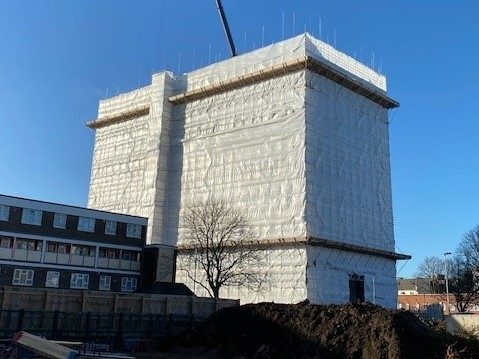
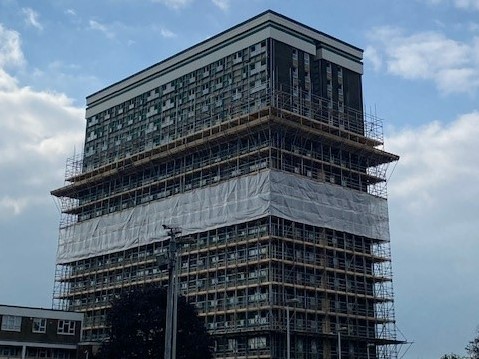
We took this approach at Broadwater Farm in North London, where the structural integrity of the LPS blocks was only one of an array of considerations that led to Haringey Council deciding to deconstruct and regenerate some blocks. Ridge carefully managed the deconstruction process to maximise safety and, in line with our circular economy approach, to enable the recycling/reuse of as much material as possible. Other blocks are being retained and strengthened, with Ridge overseeing that work. We have also managed the removal of gas services, now replaced by a district heating system and individual heat interface units for the flats. This solution had its own challenges, such as deciding on whether to have a centralised plant room or a series of localised ones, as well as working out how to install a new heating pipe system when the existing risers contained asbestos. We know from our experience how one decision can lead to a whole series of new considerations, such as whether the renovation will require an overhaul of the ventilation system, or new windows, or whether there will be a detrimental aesthetic impact.