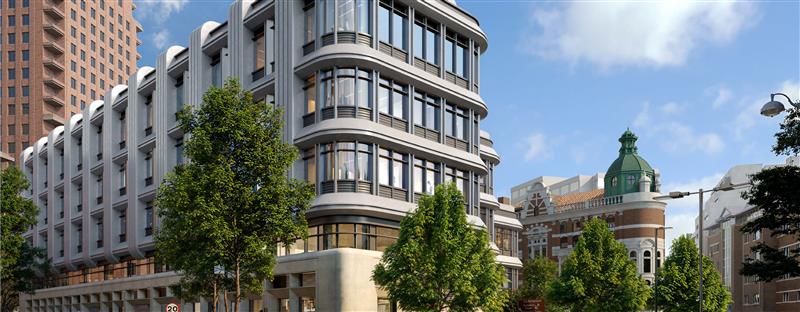
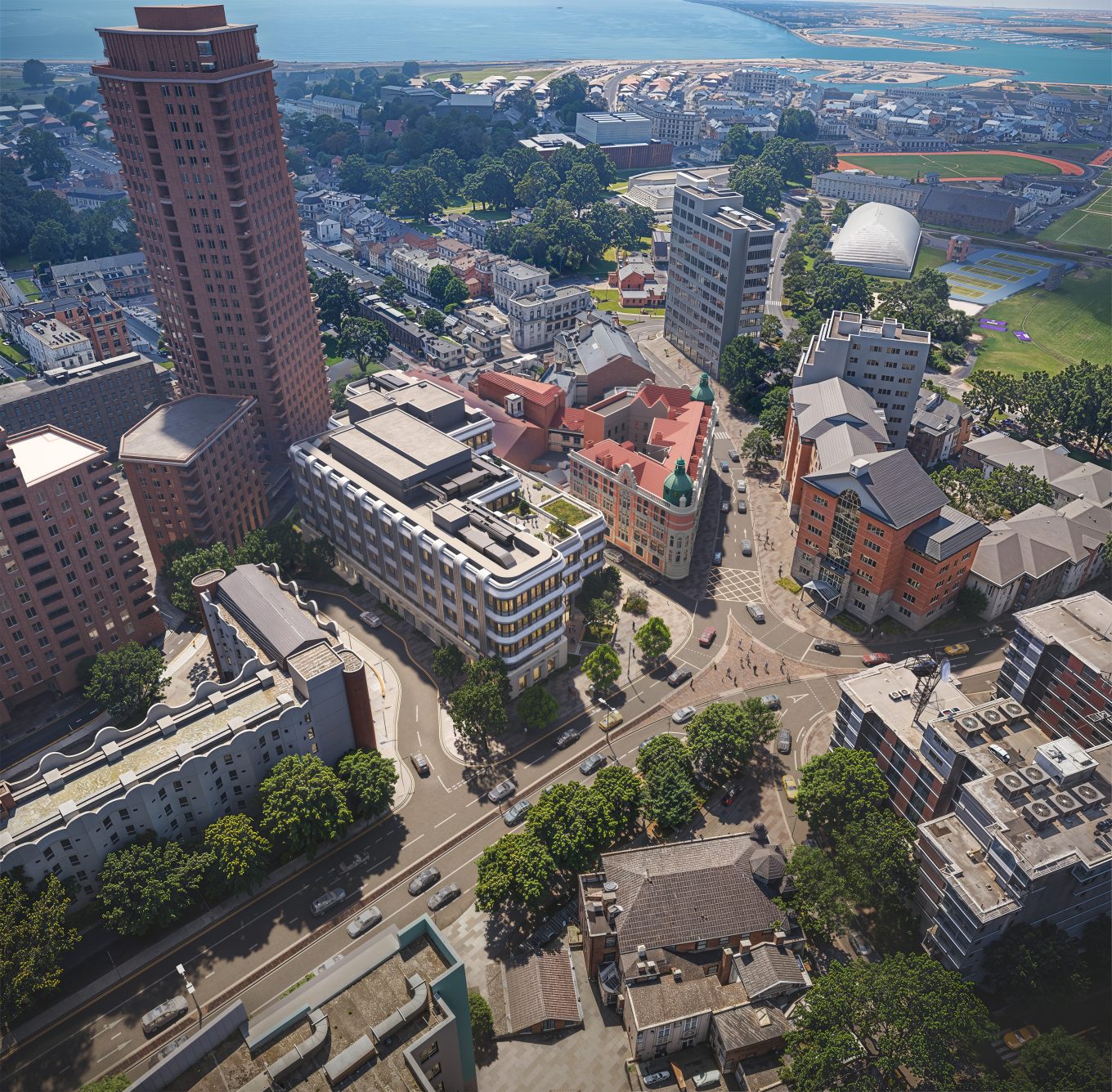
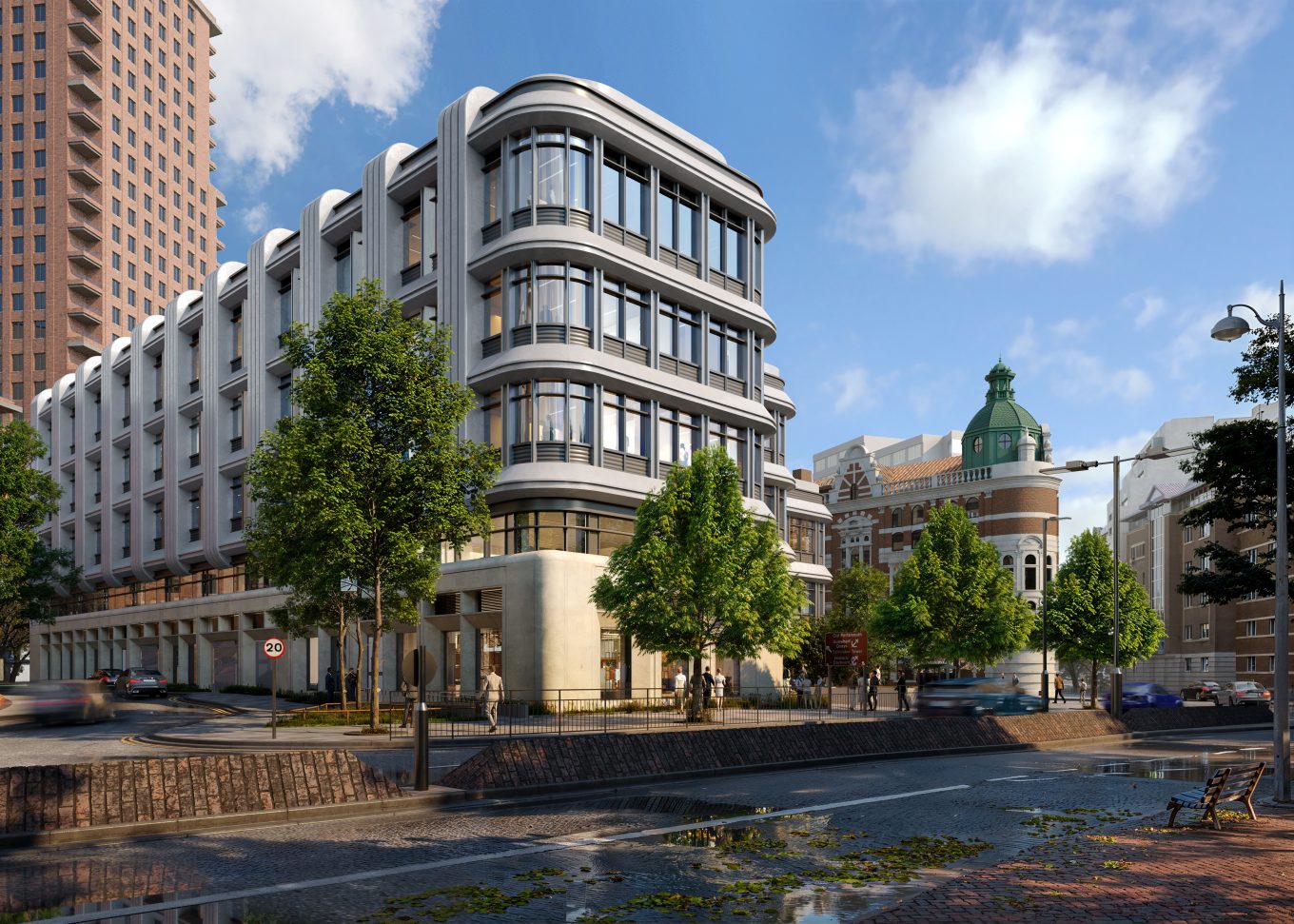
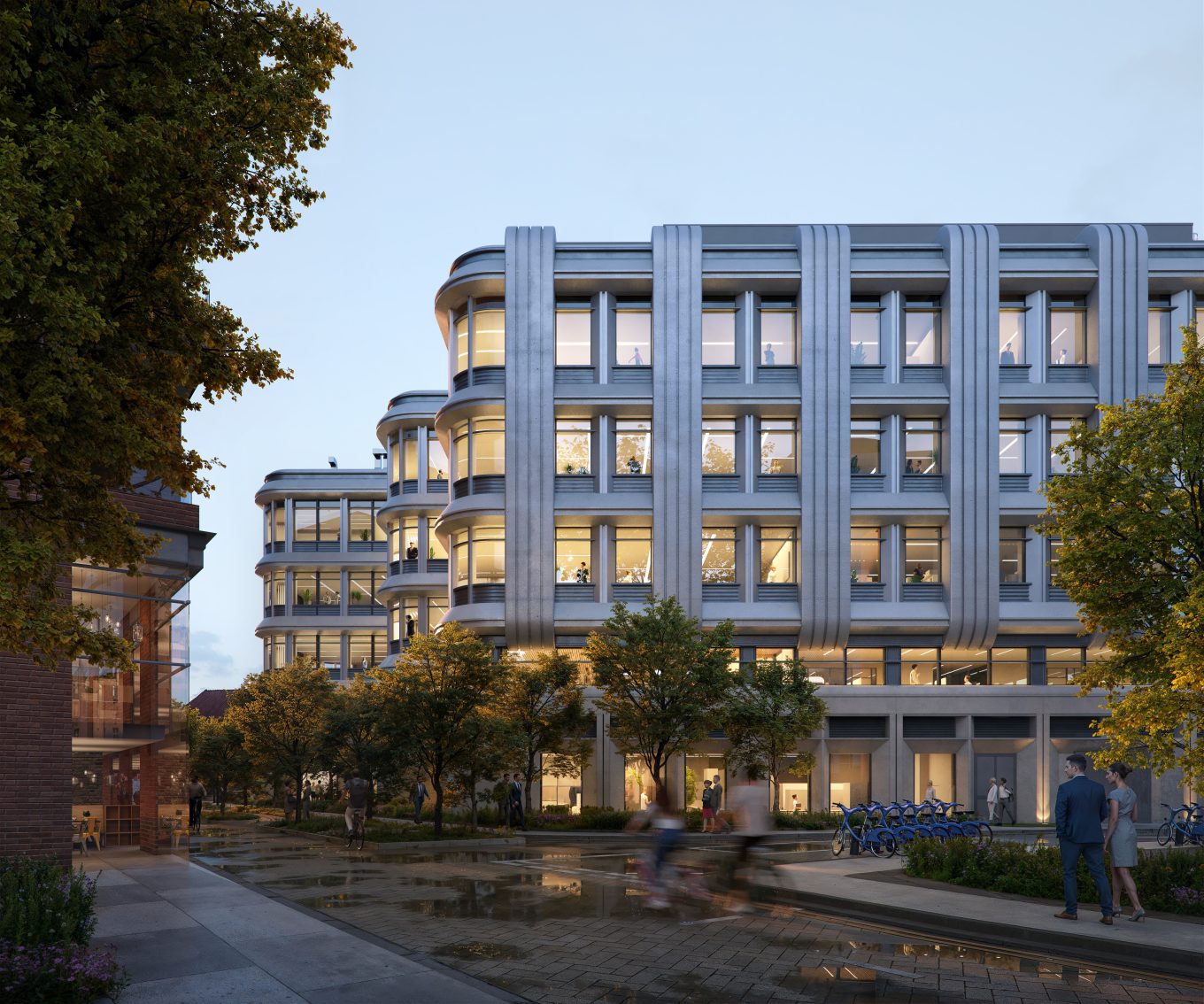
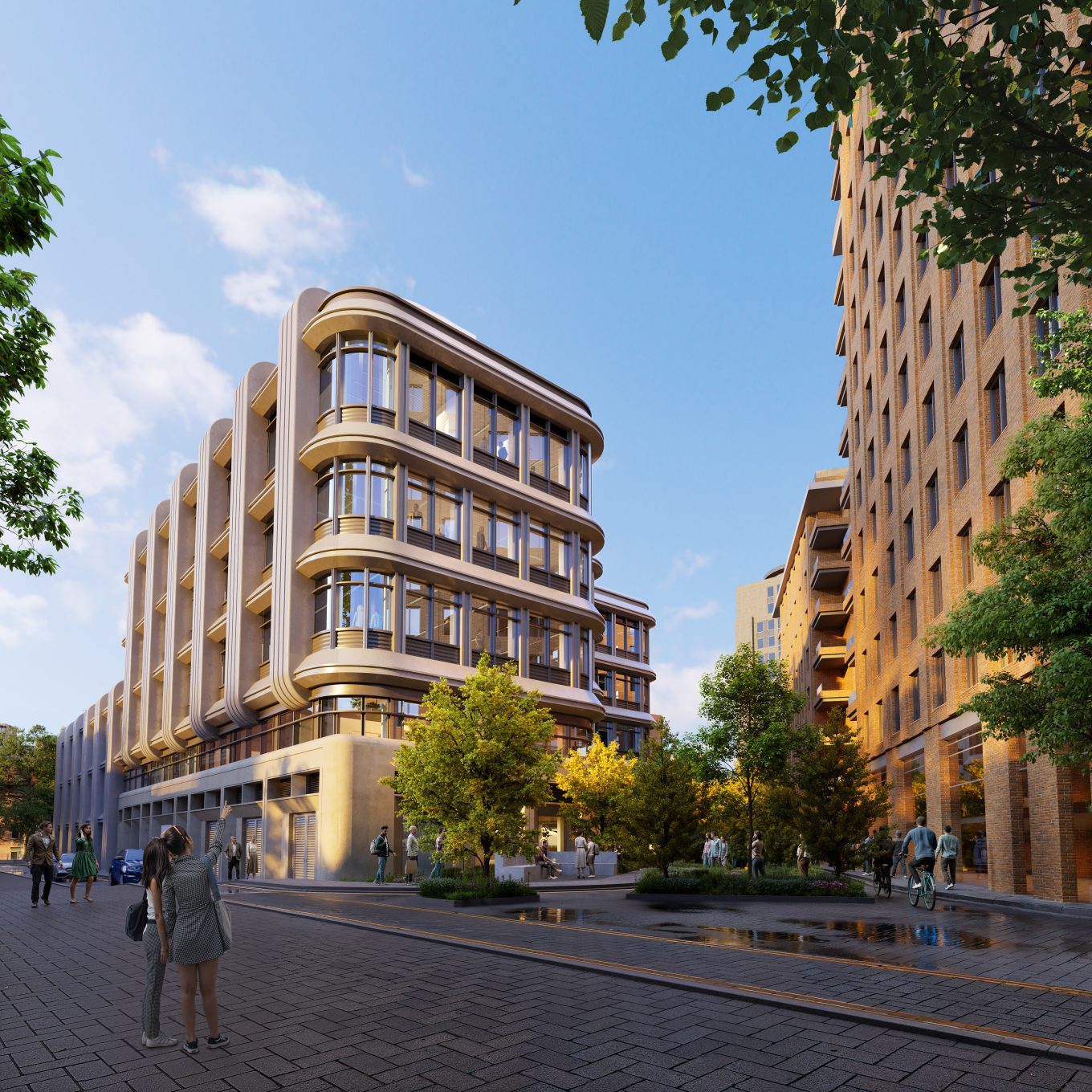
The University of Portsmouth has submitted a planning application for a new 12,340 sqm Technology Building to co-locate the Faculty of Technology, currently housed across five buildings, within a single purpose-built facility at the heart of the campus.
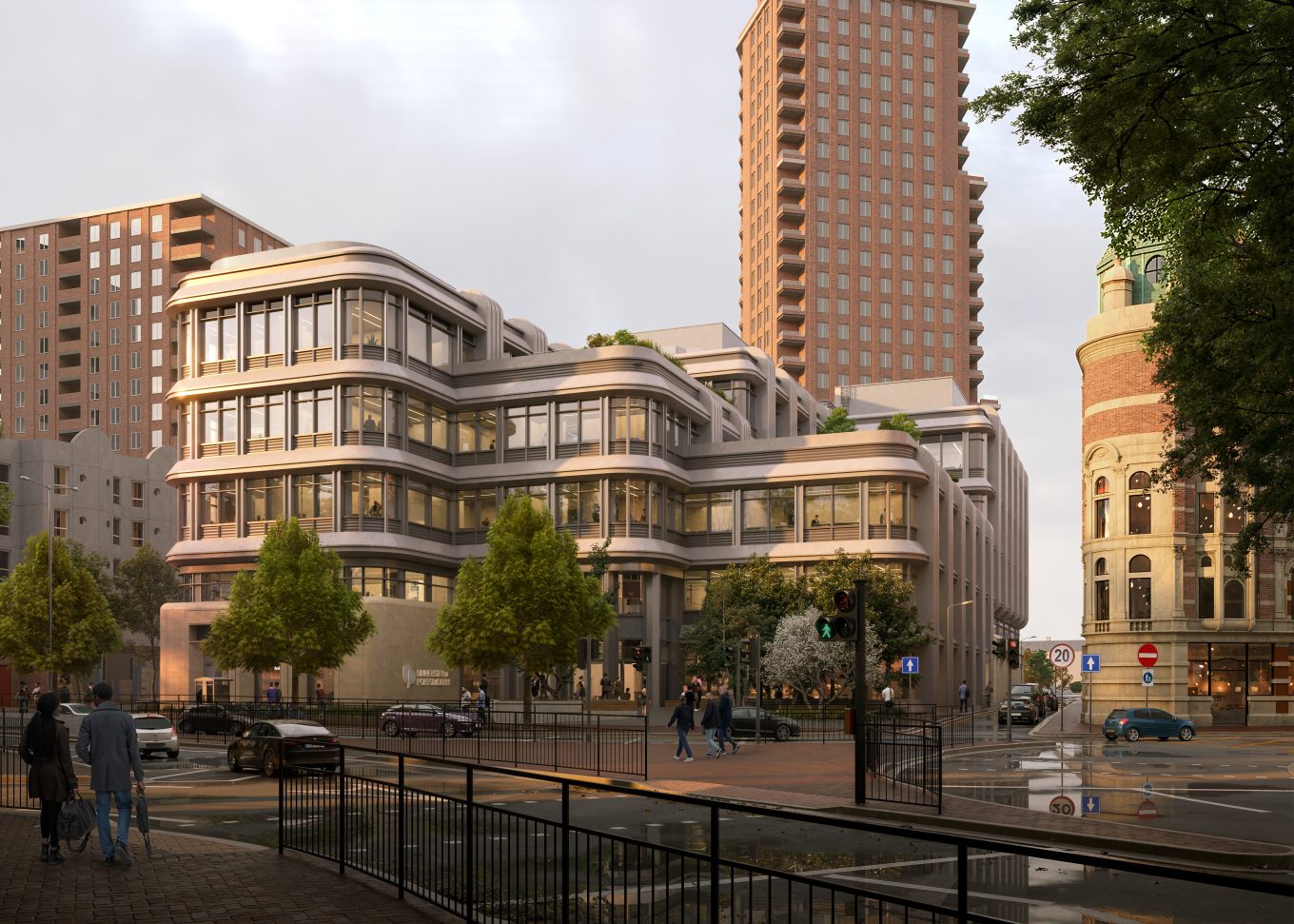
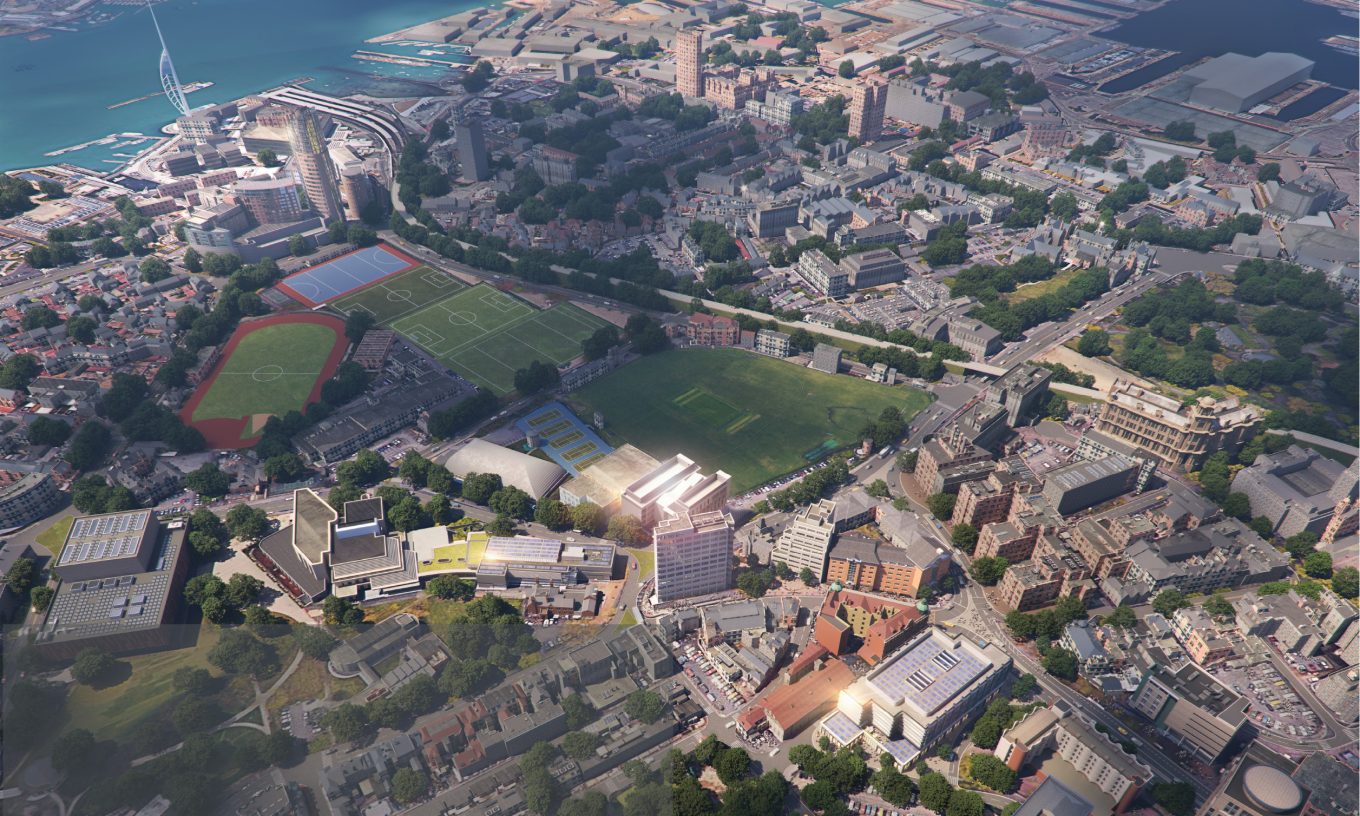
Scheduled for completion in 2028, the building will be located on the site of University House, between Winston Churchill Avenue and Melbourne Place in the city centre, creating a new civic gateway for the University and the wider Portsmouth community. The existing University House site, which currently provides workspace for staff from across the university, is to be demolished, and staff relocated to nearby university-owned offices.
The new Technology Building is part of the university’s estate masterplan, which will see it invest £250 million over ten years. The university’s mission is to become the UK’s top modern university by 2030 and to enhance faculty facilities and amenity provision for students and staff.
The Faculty of Technology Building will create a landmark STEM facility for the University of Portsmouth. It will provide a highly adaptable, interdisciplinary environment that enables world-class education, research, and innovation in response to the University’s academic ambitions and civic responsibilities.
The Faculty of Technology Building will create a landmark STEM facility for the University of Portsmouth. It will provide a highly adaptable, interdisciplinary environment that enables world-class education, research, and innovation in response to the University’s academic ambitions and civic responsibilities.
The building will provide social learning areas, a lecture theatre, event spaces, and specialist laboratories and workshops for AI and cybersecurity, energy and advanced manufacturing. These will be housed alongside classrooms, computer suites, offices, and a variety of meeting and collaboration spaces designed to foster interdisciplinary exchange.
The building will bring together the School of Engineering, School of Civil Engineering & Surveying, School of Maths & Physics, and School of Computing into closer proximity to key campus services such as the library, student hub, and sports centre. It will create new green spaces and improve pedestrian routes, supporting the University’s ambition for a unified, walkable campus and contributing positively to the city’s public realm.
It targets BREEAM Outstanding certification and incorporates strategies to support WELL principles, embedded from the earliest design stages. The project also targets a DEC A rating and is fully electric, eliminating reliance on fossil fuels and supporting the University’s commitment to climate-positive operations by 2030 and aligning with national net-zero carbon requirements.
As a fully enabled SMART building, it will integrate advanced digital systems to monitor and optimise energy performance, environmental quality, and operational efficiency. Intelligent building management systems will provide real-time control of heating, cooling, ventilation, and lighting, reducing energy waste and operational costs while improving user comfort.
The design minimises whole-life carbon through efficient structural systems, low-carbon materials, and strategies that reduce embodied carbon during construction and operation. This holistic approach ensures the building is future-ready and sets a benchmark for sustainable higher education developments in the UK.
The design minimises whole-life carbon through efficient structural systems, low-carbon materials, and strategies that reduce embodied carbon during construction and operation. This holistic approach ensures the building is future-ready and sets a benchmark for sustainable higher education developments in the UK.
Blue and green infrastructure – including rain gardens, green roofs, and native planting – enhances climate resilience and supports sustainable drainage. The project also delivers measurable ecological benefits through a comprehensive Biodiversity Net Gain (BNG) strategy, creating habitats for pollinators and urban wildlife and ensuring a net gain in biodiversity value through on-site and off-site enhancements.
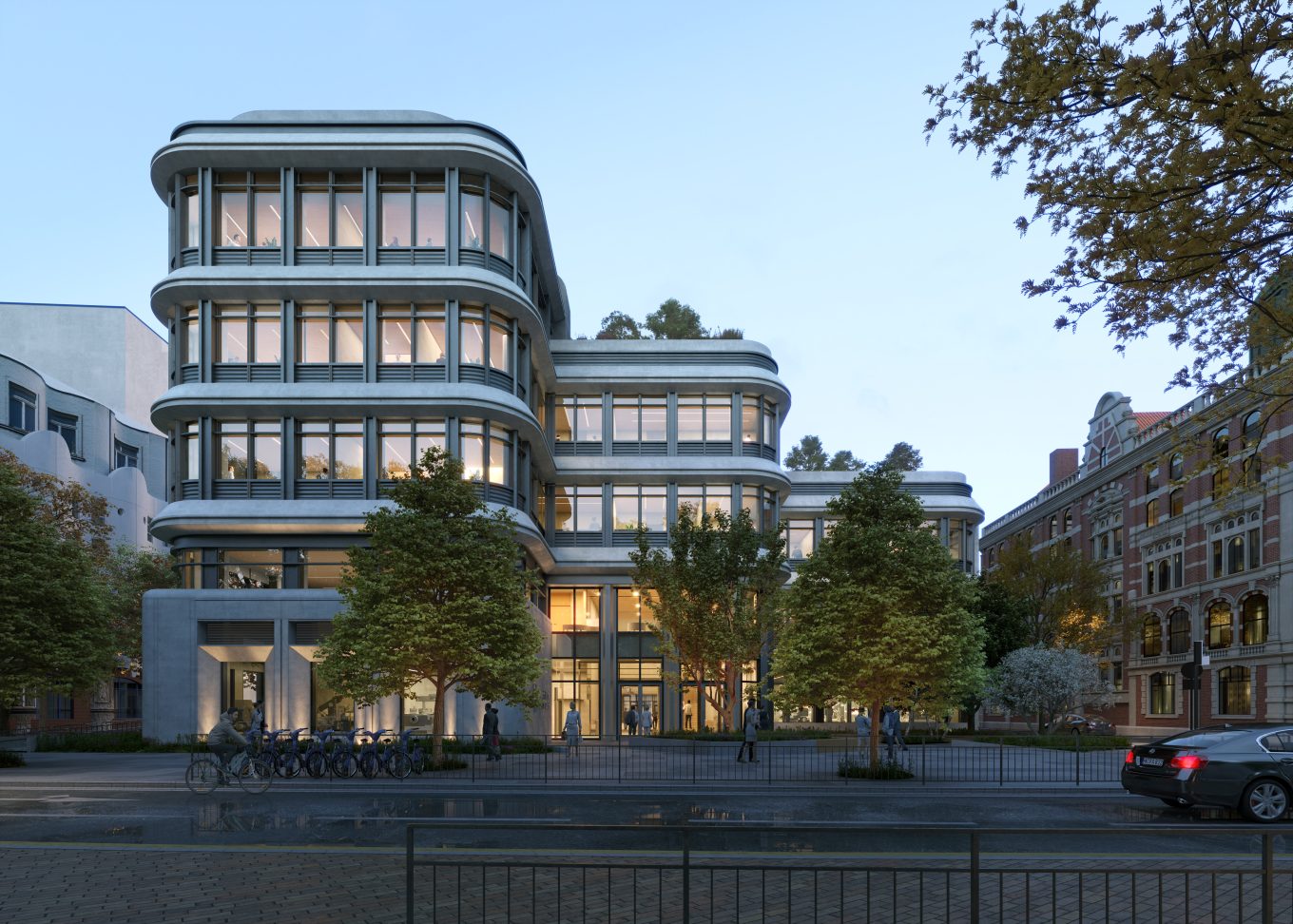
The design team has also worked closely with Portsmouth City Council to retain as many mature trees as possible. Where tree loss is unavoidable, new planting and off-site biodiversity enhancements will ensure a net gain in habitat value, in line with national legislation and the University’s Green Infrastructure Strategy.
Our role
We are the architect and lead designer for the project and are also undertaking cost consulting and project management.
We are working alongside Max Fordham (building services, acoustics, sustainability and lighting); CampbellReith (structural and civil engineering), Macfarlane and Associates (landscape architecture) and a series of specialist teams from GIA, Freeths, Sweco and Osbourne Associates.
Ridge has provided external consulting input to the University’s wider masterplan, working with the University since 2023 to help refocus its city-centre estate around the student experience.
The vision for a ‘central spine’, along which central university facilities are connected and brought within easy walking distance, is part of a wider plan to more seamlessly integrate the university’s buildings with the city and with one another.
The ‘spine’ will improve connectivity, accessibility and collaboration across the university and provides a clear route through the campus, enhancing movement and fostering community by linking faculties, research hubs, and student services.
The ‘spine’ will improve connectivity, accessibility and collaboration across the university and provides a clear route through the campus, enhancing movement and fostering community by linking faculties, research hubs, and student services.
Ridge also played a central role in both the strategic and architectural development of the Faculty of Technology Building.
Early in the process, Ridge worked closely with the University to model and rigorously test a range of potential site options. As one of the first major projects in the University’s campus masterplan, it was critical to ensure the Technology Building was optimally located in relation to the new central campus spine—a key axis designed to connect major university facilities and foster a unified, walkable campus.
The chosen site was selected for its ability to accommodate the required floorspace for specialist ground-floor laboratories and for its contribution to the wider campus environment and its ability to support necessary relocations of existing university functions.
Once the site was confirmed, Ridge led the design process with a focus on flexibility and future-proofing. The building’s structural grid and floorplates were developed to allow for large, column-free spaces—particularly for specialist lab. This enables the integration of advanced equipment and ensures the building can respond to changes in technology, teaching methods, and research priorities over its lifespan.
Openness and accessibility are at the heart of the design. The main entrance, featuring a double-height glazed façade on the north elevation, creates a strong civic presence, enhances visual and physical connectivity between the building, the campus, and the wider city, and invites engagement from students, staff, industry partners, and the public.
Openness and accessibility are at the heart of the design. The main entrance, featuring a double-height glazed façade on the north elevation, creates a strong civic presence, enhances visual and physical connectivity between the building, the campus, and the wider city, and invites engagement from students, staff, industry partners, and the public.
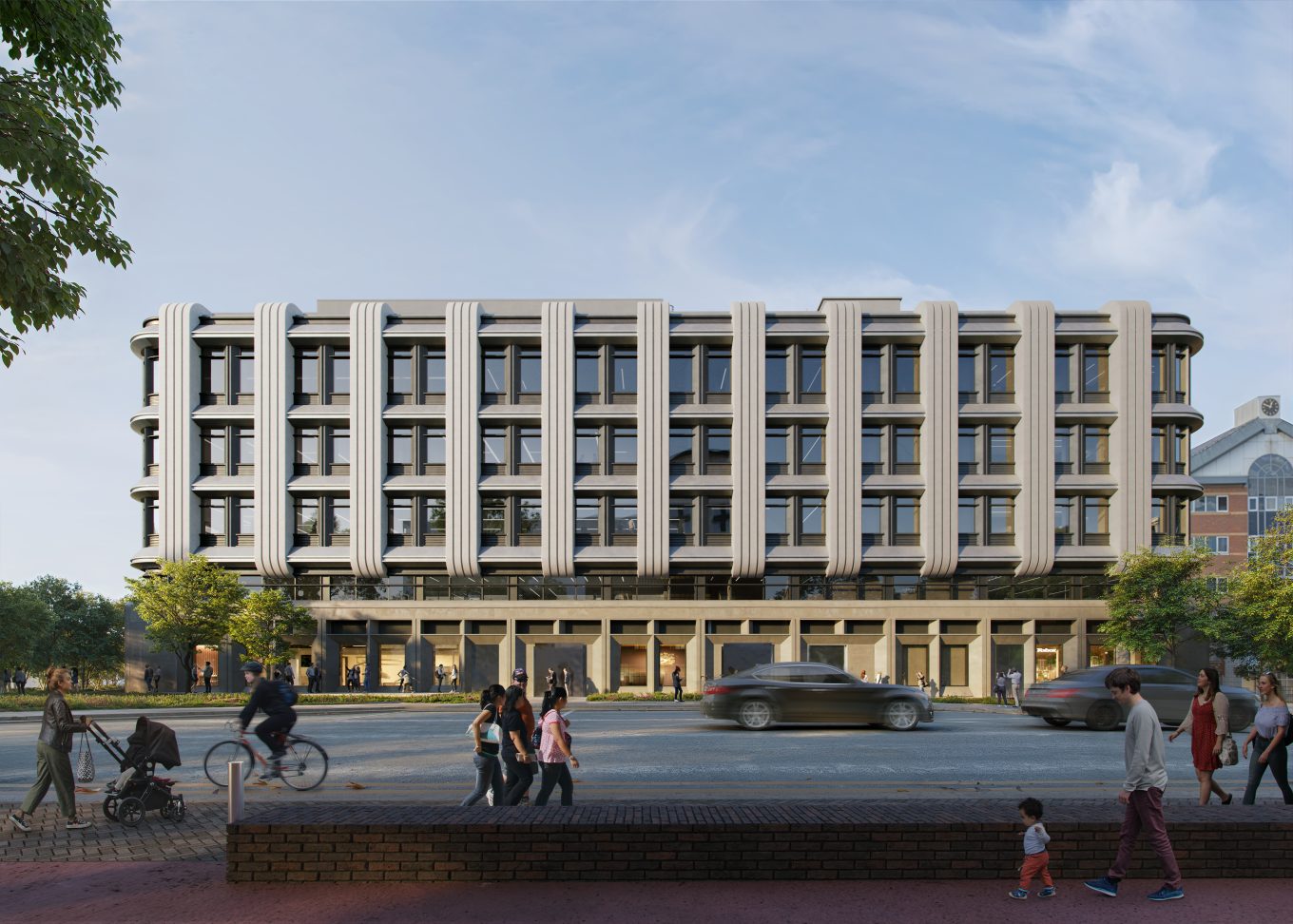
The building envelope and massing have been carefully shaped to respect neighbouring buildings, optimise daylight, and minimise environmental impact. Distinctive stepped massing and vertical façade ‘ribs’ along the east and west elevations serve as solar shading, reducing overheating from low-angle sun, and protect daylight for neighbouring properties. They also serve as integrated ventilation risers, which free up internal space and support the building’s sustainability goals. Materiality and contextual references ensures the new building sits harmoniously within its historic setting, adjacent to Charter House and the Terraces Conservation Area.
Internally, the design prioritises central social learning spaces and open circulation routes to foster collaboration and a sense of community among students and staff. Regularly occupied spaces such as teaching rooms, offices, and laboratories are located along the perimeter to maximise natural light, while central social learning areas create a vibrant communal core that encourages interdisciplinary collaboration. The overall result is a highly adaptable, sustainable, and welcoming facility that delivers on the University’s academic ambitions and strengthens its civic identity within Portsmouth.

For more information, contact Leonardo Ali, Associate Architect.