Sorry, www.ridge.co.uk is not supported by Internet Explorer.
Sorry, www.ridge.co.uk is not supported by Internet Explorer.


Every industrial process presents safety risks, and the manufacture of batteries for electric vehicles is no different.
The chemicals used – solvents, acids and heavy metals – can be acutely toxic, even in small amounts. Many components, especially of lithium-ion batteries, are also highly flammable, and thermal runaway events can lead to fires that are difficult to control.
Manufacturers implement strict safety protocols to mitigate these risks, and they must also demonstrate they comply with a number of different regulations, designed to protect both workers and surrounding communities.
For battery start-ups looking to commercialise their technologies as quickly and cost-effectively as possible, all of this can appear daunting.
But it doesn’t have to be: EV batteries are a relatively new technology, but the “gigafactories” that make them have elements in common with car production lines, pharma labs and chemical plants. They must also meet some of the same regulations, for which there are tried-and-tested strategies.
As lead health and safety advisor on advanced manufacturing and R&D facilities across the battery ecosystem, the team at Ridge has worked through all of these issues. We act as Principal Designer under the CDM regulations for design and site safety, and we support the process of securing a licence under Control of Major Accident Hazards (COMAH) legislation, which includes detailed hazard identification. This supports environmental permitting, and helps to make the case to local planning authorities and the Health & Safety Executive.
We apply best practice from our work in related industries, and we develop novel approaches tailored to the demands of the battery manufacturing process, in collaboration with Ridge design teams, clients and contractors.
Here are our top five lessons for managing the risks and keeping the process on track.
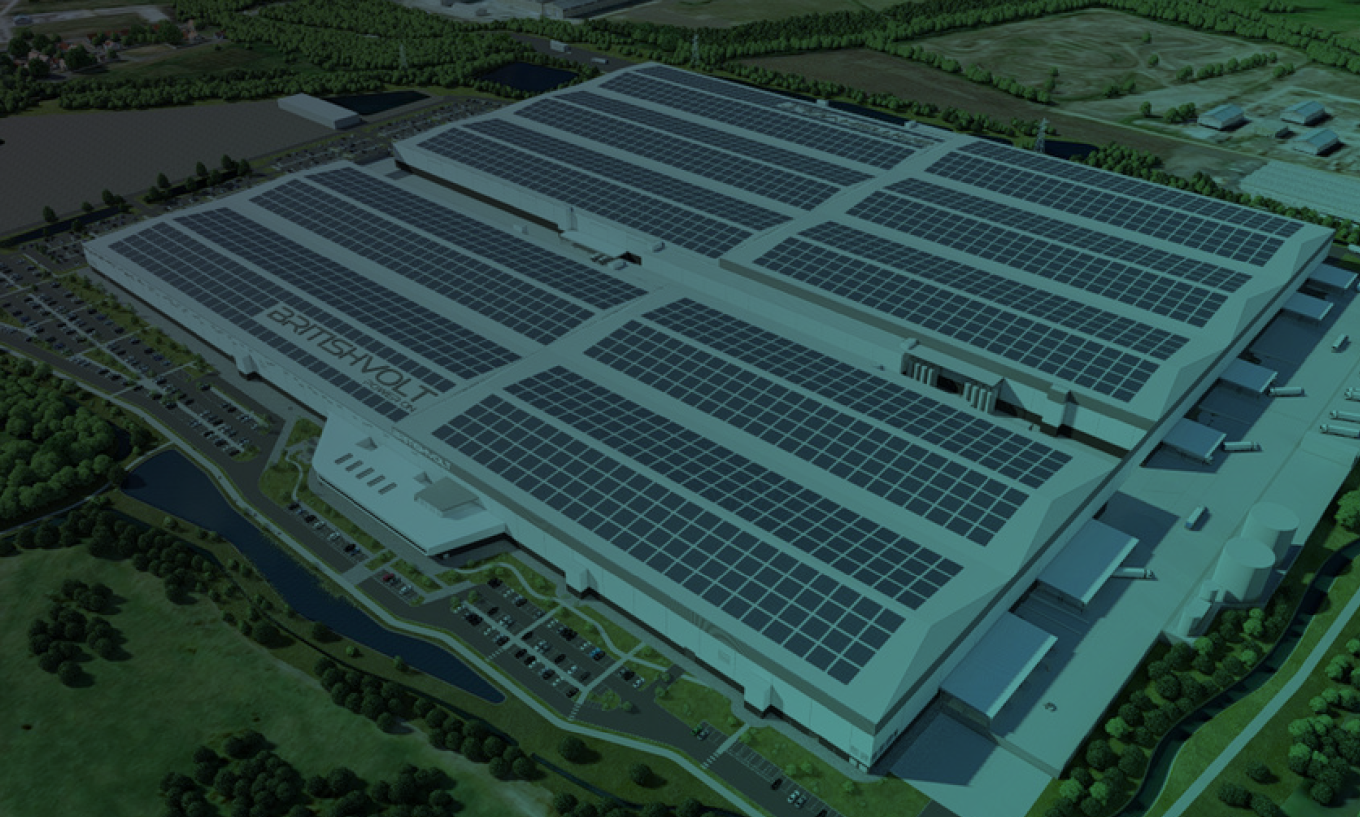
The battery industry is fast-moving, and many of the players are scaling from start-up to commercialisation very rapidly. That means that they are often going into production before they have built up all the procedures and documentation that a larger organisation has in place. The role of the lead safety advisor is therefore much broader than in other industries. It involves developing health and safety policies and risk assessments, in parallel with the regulatory compliance for the facility. For example, when we started working with Britishvolt in Northumberland, there were only three people in the company. Following a workstream system set up by the Ridge Project Management team, we created a health and safety committee, which we led alongside the client’s head of safety. We had weekly catch-ups, during which we supported them to develop the compliance documentation that was required.
On chemical plants, flammable liquids are typically stored in static tank farms which are separate from the building. At Britishvolt, we successfully lobbied the Health and Safety Executive to allow large mobile tankers to be directly hooked up to the process line. This has several advantages from a process point of view: the volume of liquid required for a gigafactory makes this a more practical, resilient solution, and facilitates future changes in battery chemistry, or smaller experimental trials. We were also able to demonstrate that it reduces the onsite risks to workers, by limiting confined space entry. Instead, the empty tanks would be driven away, and subject to an inspection regime to fulfil storage and transport regulations.
On very large industrial construction projects, the travel distances involved mean that in the event of an accident, it could take the emergency services more than ten minutes longer to attend the scene, even after they’ve arrived at the site entrance. One innovation we’ve introduced on recent projects, including Britishvolt, is to employ a Medical Emergency Response Team (MERT): trained paramedics who would be onsite the whole time. That’s unusual for a construction site, but given the size and scale of these projects, and the risks involved, it’s been recognized as an important measure to keep workers safe.
As lead health and safety adviser, one of our roles is to draw together many different project stakeholders into a single safety process. That can be quite tough, especially on large, complex projects. We have to find a way to communicate a very clear understanding of our safety obligations: thinking beyond the regulatory baseline about how to keep people safe and achieve Zero Harm across the project.
One idea we’ve taken from our work with the automotive industry is a Safety Charter. During workshops with all of the design team, the client and the contractor, we develop a 10-point list of commitments. We make that into a poster for everyone to sign. On one project, it was displayed on site as a massive totem pole. On car production lines, a common way to reinforce excellent quality standards is for workers to physically sign an exemplar car, which they walk past every day on their way into the factory. Our Safety Charter adopts that ethos, visually cementing the importance of safety and an awareness of the risks.
Health and safety is sometimes perceived as a blocker. But we’ve demonstrated that when applied properly, it can be an enabler that adds value by bringing people together to achieve common goals. It is also be a valuable lens through which to expedite the design process. During regular workshops, we relay key considerations from the regulatory authorities back to our design colleagues. This informs site layouts and smooths the way to a safe, compliant, efficient design, as well as supporting the requirements of the manufacturing process itself.
As the UK moves towards Net Zero by 2050, the electrification of fossil-powered processes will demand ever greater battery capacity – which means greater risks from their manufacture. Mitigating these will require new solutions and approaches, but it doesn’t have to be a break on progress. Regulations have been developed over many years, applying the learning from previous accidents and successful risk management in other industries. By working as a closely integrated team, and putting safety at the heart of the design process, we too can learn from these to deliver the essential infrastructure of the 21st century, and keep workers and communities safe.
Tom Bloxsom CMIOSH is a Partner in the Health and Safety team at Ridge.

Contact him on TBloxsom@ridge.co.uk

Thank you for signing up. We look forward to sharing updates with you