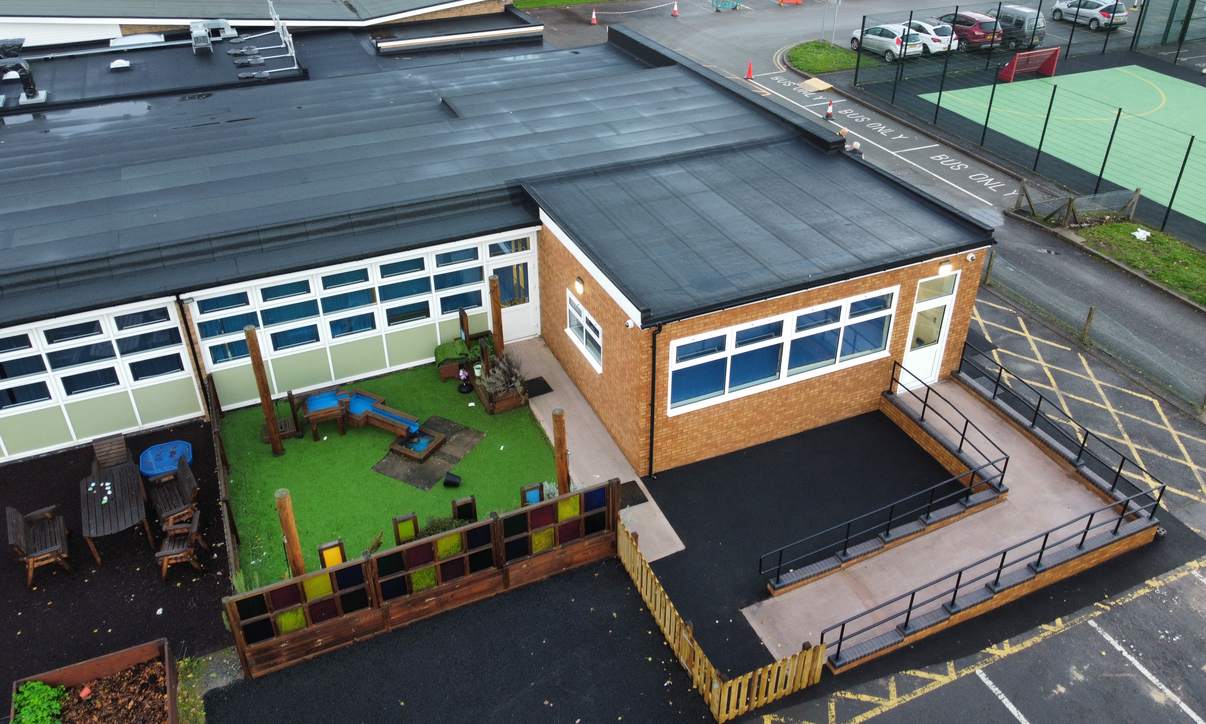
Sorry, www.ridge.co.uk is not supported by Internet Explorer.
Sorry, www.ridge.co.uk is not supported by Internet Explorer.


Across England, there’s a crisis in support for children with special educational needs and disabilities (SEND), and local authorities are under pressure to meet rapidly growing demand. There are now over 1.6 million pupils with SEND, 18.4% of the school population, and a nationwide shortage of places across both mainstream and special schools.
Across England, there’s a crisis in support for children with special educational needs and disabilities (SEND), and local authorities are under pressure to meet rapidly growing demand.
As architects specialising in education buildings, we’ve seen first-hand how passionate, dedicated SEND teachers strive every day to give pupils the very best learning experience that they’re capable of – and we think that there’s much more that we in the built environment could do to support them.
Designers can draw on a growing body of research about how buildings affect our health and wellbeing, and how we can create indoor environments that nurture and care for their occupants. At Ridge, a growing number of our clients are asking how their buildings measure up against standards such as WELL, which assesses a whole range of criteria from air quality, natural light and acoustics, to biophilic design and opportunities to move around. Why aren’t we thinking about SEND schools in this way, and prioritising wellness within specifications?
Of all the building users we design for, these children really do need the healthiest environments. The wellbeing in buildings movement was inspired by the fact that we spend as much as 90% of our time indoors – but some children with SEND may be unable to spend any time outside at all. They deserve to be taught in buildings that cater for their sensitivities, without being as clinical as a hospital, whether they have severe physical disabilities, profound mental or learning difficulties, or autism or ADHD. The most severely disabled pupils may be fed via a tube, or need a constant supply of oxygen, or be unable to regulate their body temperature. Some children may not progress developmentally beyond early years, and learn through sensations such as touch and taste, so their surroundings are even more important.
The wellbeing in buildings movement was inspired by the fact that we spend as much as 90% of our time indoors – but some children with SEND may be unable to spend any time outside at all.
Prioritising wellness in school buildings would be of real benefit to the families of SEND children too, who are often very isolated. Their home environments can be tough, and their caring responsibilities may mean that they cannot work outside of the home, or have any free time to themselves. For them, a school can be a lifeline and a vital source of community. It’s inspiring to see local authorities embracing this opportunity on new projects: we’re designing a new SEND school for Liverpool City Council that will have a “village” to welcome families for some respite while their children are being looked after.
It’s inspiring to see local authorities embracing this opportunity on new projects: we’re designing a new SEND school for Liverpool City Council that will have a “village” to welcome families for some respite while their children are being looked after.
Today, on most new school buildings, there is rarely enough funding to do more than deliver the baseline design. The kind of features that support wellbeing are typically the first to be value-engineered out, and the landscape architect receives the very last, thinnest slice of the budget.
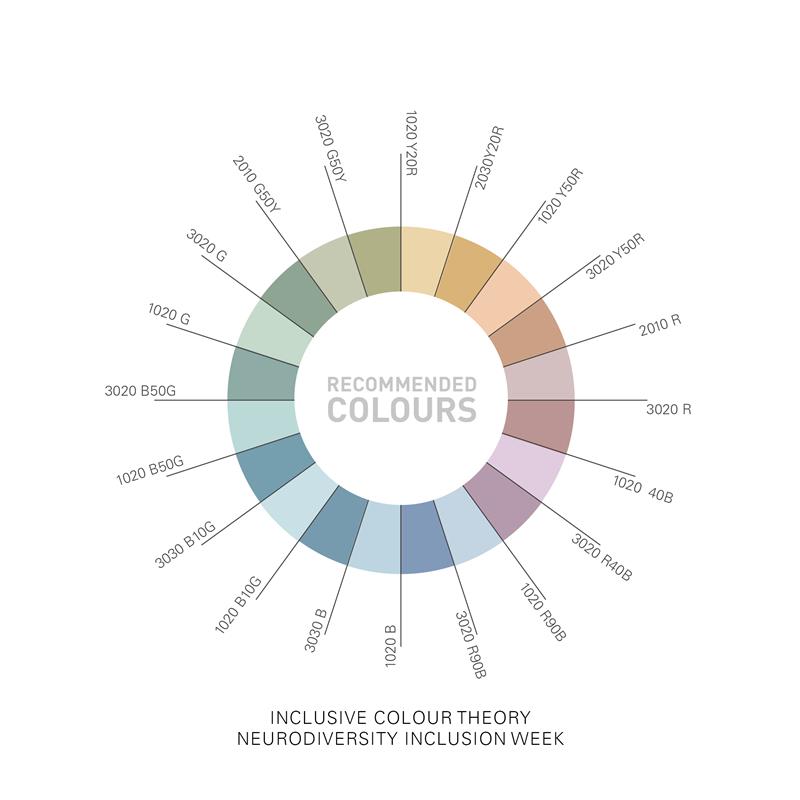
Some wellness features are undeniably aspirational. In an ideal world, we would install underfloor heating to offer an even spread of temperature control. But there are many other ways to improve the environment that don’t require such significant investment. Views of green space is an enormous one. We know that just being able to see a tree has a beneficial effect, both physically and mentally. For these children, indoor environments that bring them closer to nature could make all the difference. It may not be possible to bring plants into the classroom, but we could improve landscaping around the school to provide more views of greenery, or even just introduce a more natural colour pallet. We encourage clients to use the autism-friendly inclusive colours recommended by the National Autistic Society, which has some lovely muted green tones.
We also try to eliminate dangerous substances like solvents in the selection and application of furniture and finishes, as we know some SEND pupils have a tendency to place objects in their mouths, or try to open them up. This is an example where we could do better, just by thinking about wellness during the design process, applying the WELL principles where we can, to deliver best practice and create the healthiest environments possible. By considering future retrofitting opportunities, we can also ensure that we don’t inadvertently close down those avenues.
Every effort counts in this endeavour – even if we only get halfway there, it can only benefit SEND pupils and their families.
Find out more about how Ridge helps design healthier schools by contacting Alice at aliceparker@ridge.co.uk

Alice is Partner and Ridge Architectural lead for Education, based in Manchester. She has been working in the Education sector for 17 years with experience designing and delivering many medium to large-scale schools and Further Education facilities and working in, live educational environments. Alice has designed over 10 UK SEND Schools in the last 5 years, ranging from PMLD, an AP school and SEN units within mainstream schools. You can contact Alice on aliceparker@ridge.co.uk

Nathalie is a Senior Architectural Associate for Ridge, based in Birmingham. In her 12 qualified years, she has worked in the education sector, designing, and delivering various sizes of schools across different building programmes and frameworks. You can contact Nathalie on nathalierichardson@ridge.co.uk
Alice, Nathalie and a team from Ridge will be attending the Education Estates event 15 – 16 October in Manchester Central on Stand 235 (next to the SEND stage) and would love to connect with any attendees. Contact any of the team in advance of the Education Estates Conference:
Alice Parker
Nathalie Richardson
Paul Cooper
Chris Rogers
Phil Kelly

Thank you for signing up. We look forward to sharing updates with you