Sorry, www.ridge.co.uk is not supported by Internet Explorer.
Sorry, www.ridge.co.uk is not supported by Internet Explorer.


We are all aware of the impact our building activities have on climate change and loss of biodiversity. If we know this, why aren’t we doing more to reduce our impact?
As an architect, Murtaza works with engineers, contractors, designers, manufacturers and many others to help clients develop their brief and realise their building projects. With so many different people and organisations involved, it is not always clear where responsibility lies in reducing the environmental impact of a building. In reality, everyone has a responsibility to think more sustainably and influence a better outcome.
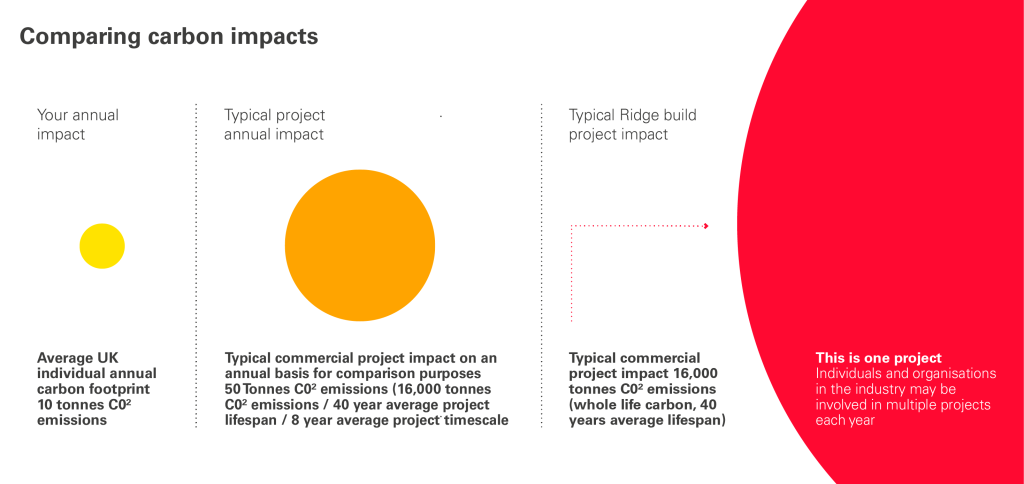
An average project can take eight years from inception to completion, create around 16,000 tonnes of carbon emissions over its lifetime, and has an average lifespan of just 40 years. As a comparison, an individual living in the UK has an annual carbon footprint of 10+ tonnes. Therefore, in just one year a single project can be responsible for around five times your annual carbon emissions. This increases exponentially when you consider that an architect will be working on multiple projects each year and hundreds of projects over their career.
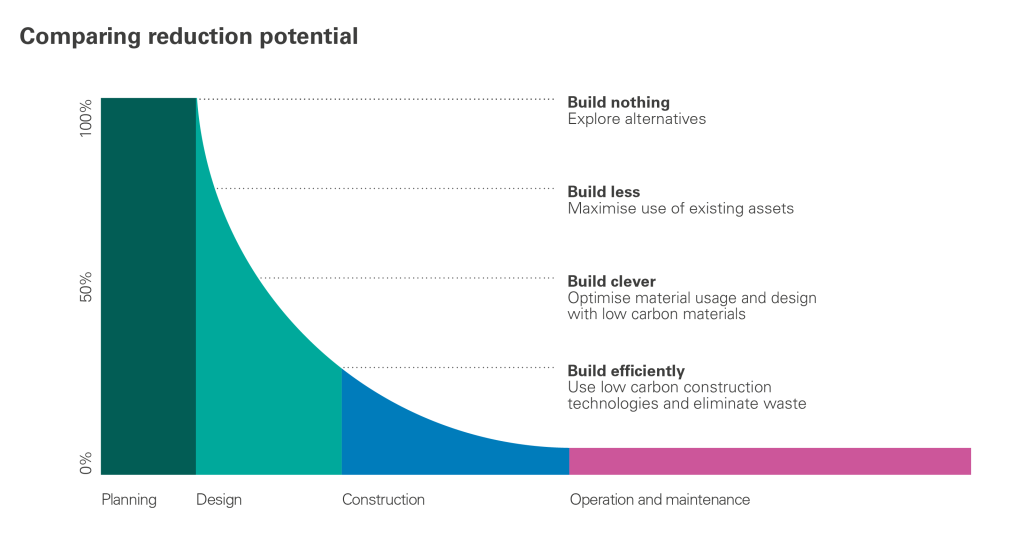
As the diagram below shows, more than 50% of a project’s carbon reduction potential is lost after the early design stages. In other words, choices made at the outset of the project about what to build, how and with what materials, will define the project’s emissions during its lifetime.
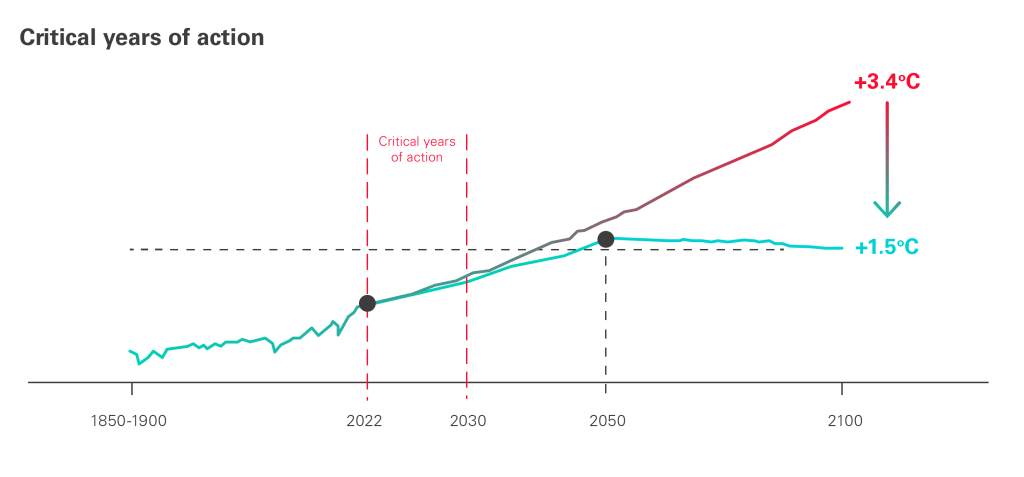
The next few years are critical if we are to limit global warming to the critical 1.5°C threshold established in the Paris Agreement (see below – with the red line showing what will happen if we don’t take action to curb emissions). So we need to start today.
An average building lifespan of 40 years is no longer appropriate. We need to adopt a long-term mindset to ensure that the buildings we design stand the test of time and avoid wasting the planet’s precious resources.
In the long term, this approach is more cost-effective too. Saving some money through a financial analysis process during a project is a false economy if the building will simply be demolished and replaced with another at the end of its life, consuming yet more resources and energy. It makes economic and environmental sense to pay more at the beginning for great buildings which will be used, loved and cared for over generations.
We need to adopt a long-term mindset to ensure the buildings we design stand the test of time and avoid wasting the planet’s precious resources.
Murtaza Rizvi, Architect.
With a myriad of technical tools and strategies available to help reduce the environmental impact of our buildings, it can be easy to overcomplicate the process. However, there are three simple principles we can keep front of mind to help curb emissions:
Small actions and behaviour changes can go a long way and may help to inspire others. It is good to be passionate about making change, and to be assertive, but pick the best time. Creating a building is a dynamic, fluid process and we need to take every opportunity to design collaboratively and understand the work of others.

If you would like to discuss any aspects of a project or seek a second opinion, we would be happy to have a chat. You can email Murtaza at murtazarizvi@ridge.co.uk

Thank you for signing up. We look forward to sharing updates with you